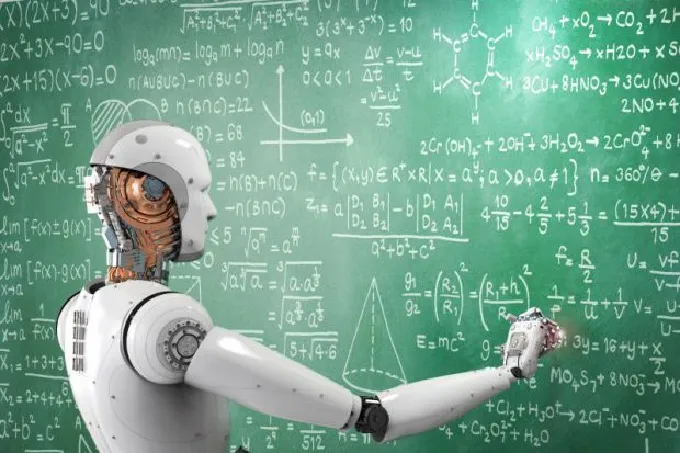
While the world is flipping out over whether student essays are copied from ChatGPT and how to detect it, we are missing out on two important possibilities. Firstly, that no essay short of the Pulitzer or Nobel for literature or new literature is original. They are all regurgitations, whether from one’s own learned knowledge or directly from an AI. Secondly, that these AIs now present a real possibility for making quality education available to all at LOW cost.
In my view, there are scant differences between reproducing verbatim (or copying) and reformulating from one’s understanding a learned concept. In fact, in math procedural repeat is often misconstrued as understanding. They are all just regurgitation with nothing new generated and a bare faced nod at true understanding. Either way, being able to find a solution even if via AI is as valuable as regurgitation in any form. Finding an appropriate solution requires some understanding of the ask itself even if one takes recourse to AI. Perhaps what really needs to be imparted as learning is how knowledge is constructed of prerequisites and what the end goal might be.
With this in mind, it would appear silly to worry only about preventing essays and math or coding problem solutions generated by AIs for homework. Perhaps we should instead phrase the tasks so that they have to first be properly interpreted by the student before invoking an AI.
Alternatively, there are a few educators who want to bring AI into the classroom as a teaching aid or to demonstrate why not to use it or how to use it better.
“Cherie Shields, a high school English teacher in Oregon, told me that she had recently assigned students in one of her classes to use ChatGPT to create outlines for their essays comparing and contrasting two 19th-century short stories that touch on themes of gender and mental health: “The Story of an Hour,” by Kate Chopin, and “The Yellow Wallpaper,” by Charlotte Perkins Gilman. Once the outlines were generated, her students put their laptops away and wrote their essays longhand.”
This is slightly more progressive than just citing AI plagiarism. However, it is time to admit to and recognize another huge new possibility.
Personalized education — paced to individual students and their needs and objectives, in the most appropriate learning style, and in the most entertaining and interesting voice.
Years ago, I and coached and led an entrepreneur who had a way to take any educational material and cast it into one of 5 separate learning strategies in to several meetings with VCs. There was probably not yet a way to automate the recasting of traditional teaching material into sequenced factual or discovery via questioning or gaming based learning strategies. However, allowing a student to discover their own best learning strategy and then self selecting that version of the traditional material … all online was a really interesting idea. Degree accreditation was also still in question for online courses and so the entrepreneur failed to obtain VC money. However, the concept is sound and I can just see students at some point in the future being much more interested in learning and able to learn much better if they could ask to be taught differential equations in the voice of The Incredible Hulk or Corporate Law in the voice of Reese Witherspoon.
Yes there are issues with AI and more development needed but universal education is a real possibility with access based cost issues completely eradicated.
And if that isn’t enough here are a many other ways to use AI in education
43 Examples of Artificial Intelligence in Education
The potential of using artificial intelligence in education to enhance learning, assist teachers and fuel more…
onlinedegrees.sandiego.edu
Imagine if SNHU which predominantly is an online platform and boasting 135000 students (in 2019), 97% of who were online and bestows degrees that bring in average salaries of $51K per year and is slated to become the first $1B institution decided to extend its course offerings and reach using ChatGPT or other AI as a teaching base. Competency based education (CBE) and micro-credentialing seem almost tailor made for AI teaching. For example GPT-4 passed the bar exam in the 90’th percentile and ChatGPT passed a medical licensing exam. What if a 100’th of the worlds population could access these programs? How many bespoke versions of the same teaching material could be offered? Instantaneously? Yes the average teacher’s job would change from merely reproducing the same lesson to perhaps engaging in discussion or devising better testing. However, imagine the scale of such low cost education?
We are on the verge of sea change in educational paradigms and particularly their effectiveness and their costs. Chat culture is prevalent and students love it. The technology is ready barring minor issues. The teachers and universities need to stop peddling old ideologies about teaching. Lets embrace these huge and wonderful opportunities instead of quibbling about identifying AI generated essays.